BEC of polar molecules
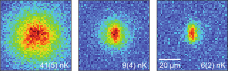
Bose-Einstein Condensate of polar molecules! Obtained by evaporating NaCs molecules with two-color microwave shielding. Sebastian Will's lab (Columbia). Nature 631, 289-293 (2024)
Read more
Assistant Professor · Radboud University
I am a researcher working in theoretical Atomic, Molecular, and Optical (AMO) Physics. My work focuses on understanding interactions and collisions between ultracold molecules.
Microwave shielding has enabled quantum-degenerate gases of molecules, degenerate Fermi gases and the first molecular Bose-Einstein condensates. Microwave shielding now provides access to dense, strongly interacting molecular gases, opening new opportunities for quantum simulation and many-body physics. We develop molecules as versatile quantum systems for emerging quantum technologies.
Bose-Einstein Condensate of polar molecules! Obtained by evaporating NaCs molecules with two-color microwave shielding. Sebastian Will's lab (Columbia). Nature 631, 289-293 (2024)
Read more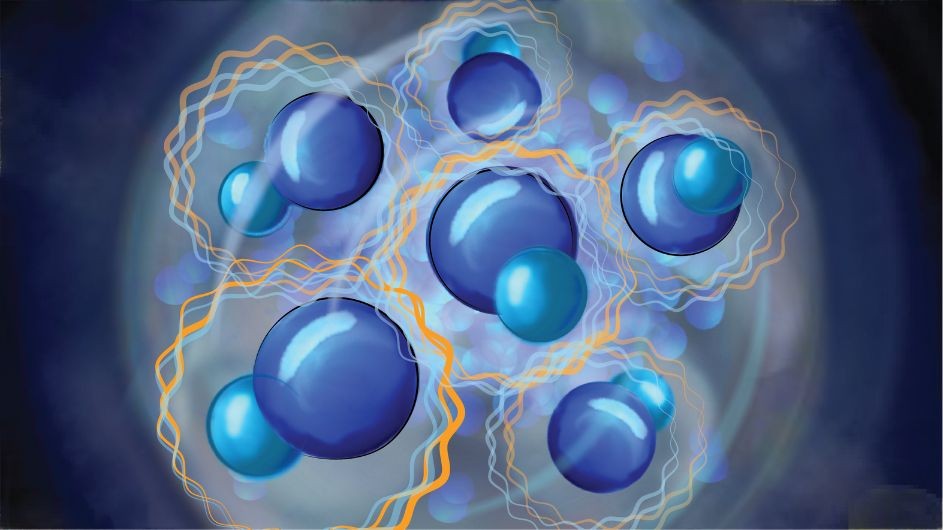
Microwave shield can eliminate two- and three-body loss, and simultaneously enable comprehensive control of interactions between ultracold molecules.
Read more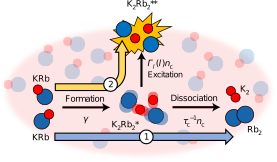
Loss of ultracold molecules is thought to be mediated by "sticky collisions". We work to improve the microscopic understanding of sticky collisions.
Read more
Quantum simulation with ultracold molecules.
Collision-induced absorption spectroscopy and machine learning
Ultracold collisions.
Shielding and sticking of ultracold molecules
Ultracold molecules
A selection of recent publications is listed below. A complete list is available on Google Scholar.
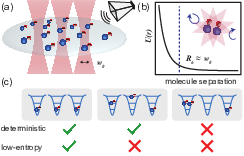
Microwave shielding naturally gives rise to an interaction blockade that enables high-fidelity loading of low-entropy arrays for quantum science.
Physical Review Letters (2026)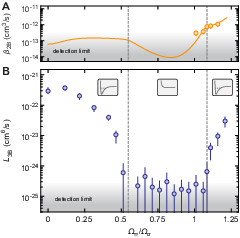
Demonstrates extreme suppression of two-body and three-body loss of ultracold molecules by microwave shielding, while tuning interactions into the strongly interacting regime.
Science (2026)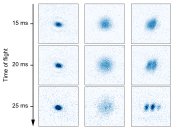
Observation of self-bound dipolar droplets of polar molecules.
Nature (2026)I am coordinator of the Atomic, Molecular, and Optical (AMO) Physics track in the BSc Physics at Radboud University.
Course information is available in Osiris, course material on Bright Space.
Current teachingI supervise BSc and MSc Thesis projects in Physics, Chemistry, and Natural Science. Send me an email to inquire about possible projects.
I received my PhD cum laude from Radboud University in 2018 with Gerrit Groenenboom. From 2017, I was a postdoctoral researcher with Jeremy Hutson at Durham University in the UK. Subsequently, I joined the Institute for Theoretical Atomic, Molecular, and Optical Physics (ITAMP) at Harvard University as an independent ITAMP Postdoctoral Fellow, supported by both an NWO Rubicon Fellowship and an ITAMP Fellowship. Since 2021, I have been an Assistant Professor at Radboud University. My research has been recognized by the Elsevier James Brault Early Career Award and the Royal Netherlands Academy of Arts and Sciences (KNAW) Early Career Award.
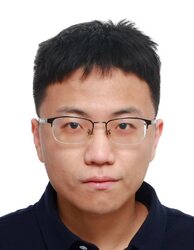
Dr. Tijs Karman
Institute for Molecules and Materials
Radboud University
Heyendaalseweg 135
6525 AJ Nijmegen
The Netherlands