Microwave shielding

Microwave shielding

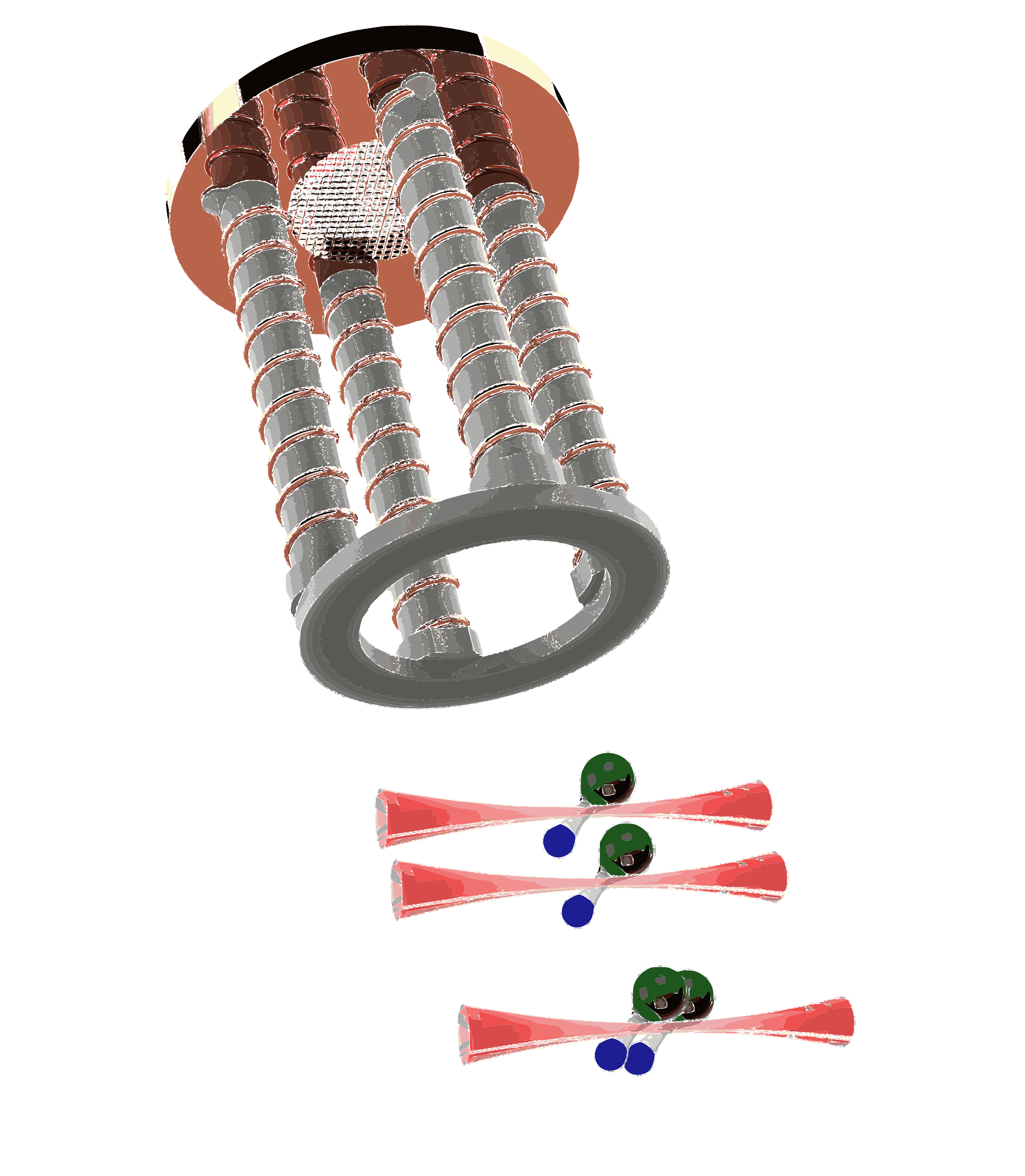
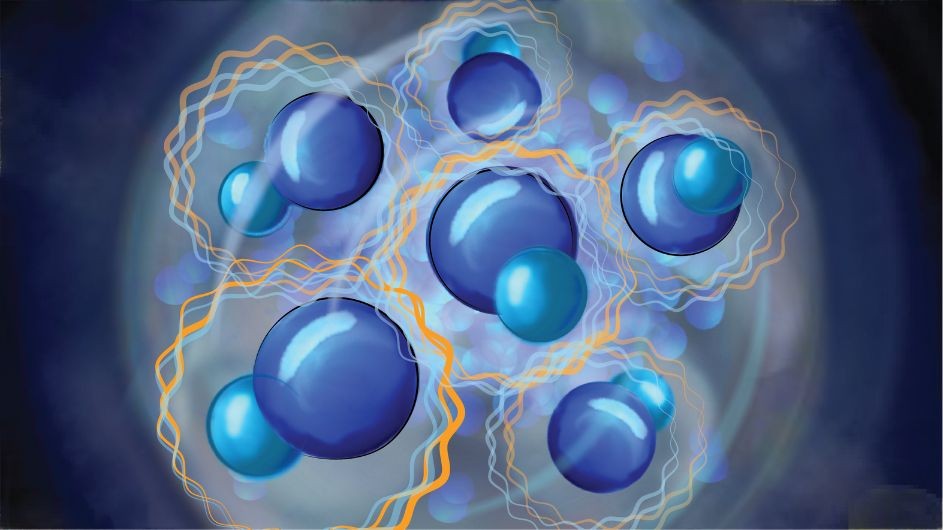
Collisional loss is a fundamental challenge in ultracold molecular gases. When molecules collide, they can be lost from the trap, making it difficult to maintain a dense, stable gas and preventing efficient evaporative cooling. We proposed collisional shielding using microwaves to engineer repulsive interactions between molecules and thereby suppress collisional loss.

Since then, we have continued to develop microwave shielding. In particular, double microwave shielding strongly suppresses both collisional loss and three-body recombination, enabling exceptionally stable, dense molecular quantum gases. Collisional shielding has become an important enabling technique for reaching quantum-degenerate molecular gases.

We now use these capabilities to explore new regimes of many-body physics and quantum technologies with molecules. The combination of long-lived, dense molecular gases and quantum degeneracy opens opportunities for quantum simulation and for studying strongly interacting quantum systems, while also bringing new questions about how shielding itself can be extended and improved.

Related publications

Figure from publication
Microwave shielding of ultracold polar molecules
Tijs Karman, Jeremy M Hutson

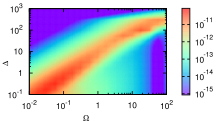
Proposal for microwave shielding, which has become an enabling technique in ultracold molecule experiments.

Physical Review Letters (2018)
Figure from publication
Double Microwave Shielding
Tijs Karman, Niccolò Bigagli, Weijun Yuan, Siwei Zhang, Ian Stevenson, Sebastian Will

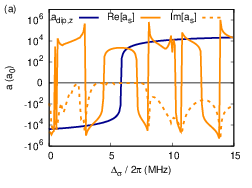
We introduce double microwave shielding by two fields to simultaneously eliminate two-body and three-body loss, while tuning interactions.

PRX Quantum (2025)
Figure from publication
Observation of Bose–Einstein condensation of dipolar molecules
Niccolo Bigagli, Weijun Yuan, Siwei Zhang, Boris Bulatovic, Tijs Karman, Ian Stevenson, Sebastian Will

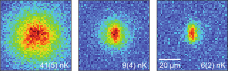
Bose-Einstein Condensate of polar molecules! Obtained by evaporating NaCs molecules with two-color microwave shielding. Sebastian Will's lab (Columbia).

Nature (2024)
Figure from publication
Collisionally stable gas of bosonic dipolar ground-state molecules
Niccolò Bigagli, Claire Warner, Weijun Yuan, Siwei Zhang, Ian Stevenson, Tijs Karman, Sebastian Will

Microwave shielding shielding of bosonic NaCs molecules.

Nature Physics (2023)
Figure from publication
Field-linked resonances of polar molecules
Xing-Yan Chen, Andreas Schindewolf, Sebastian Eppelt, Roman Bause, Marcel Duda, Shrestha Biswas, Tijs Karman, Timon Hilker, Immanuel Bloch, Xin-Yu Luo

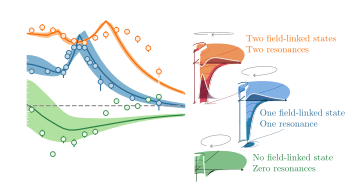
Microwave field-linked states appear in microwave shielding.

Nature (2023)
Figure from publication
Evaporation of microwave-shielded polar molecules to quantum degeneracy
Andreas Schindewolf, Roman Bause, Xing-Yan Chen, Marcel Duda, Tijs Karman, Immanuel Bloch, Xin-Yu Luo

Evaporative cooling of microwave-shielded NaK molecules to a degenerate Fermi gas.

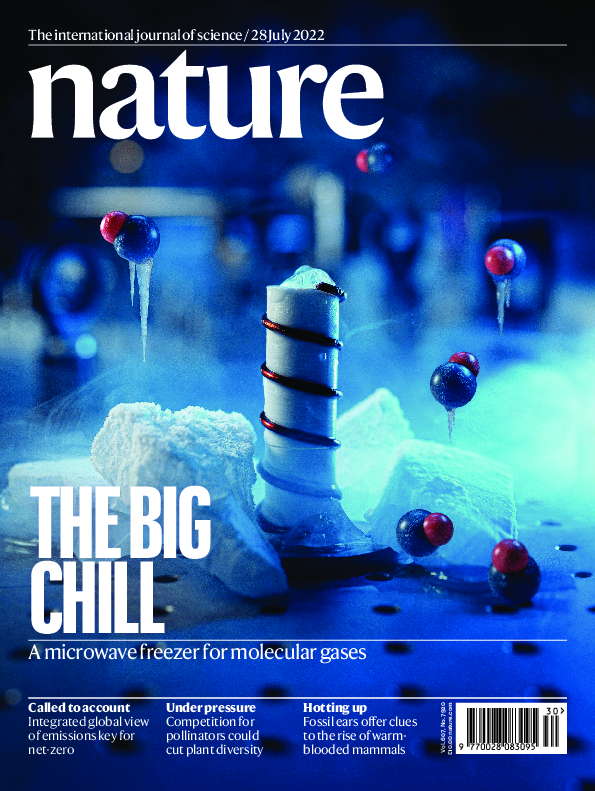
Nature (2022)
Figure from publication
Observation of microwave shielding of ultracold molecules
Loïc Anderegg, Sean Burchesky, Yicheng Bao, Scarlett S Yu, Tijs Karman, Eunmi Chae, Kang-Kuen Ni, Wolfgang Ketterle, John M Doyle

First realization of microwave shielding!

Science (2021)

← Back to homepage