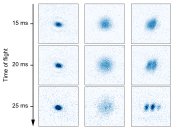
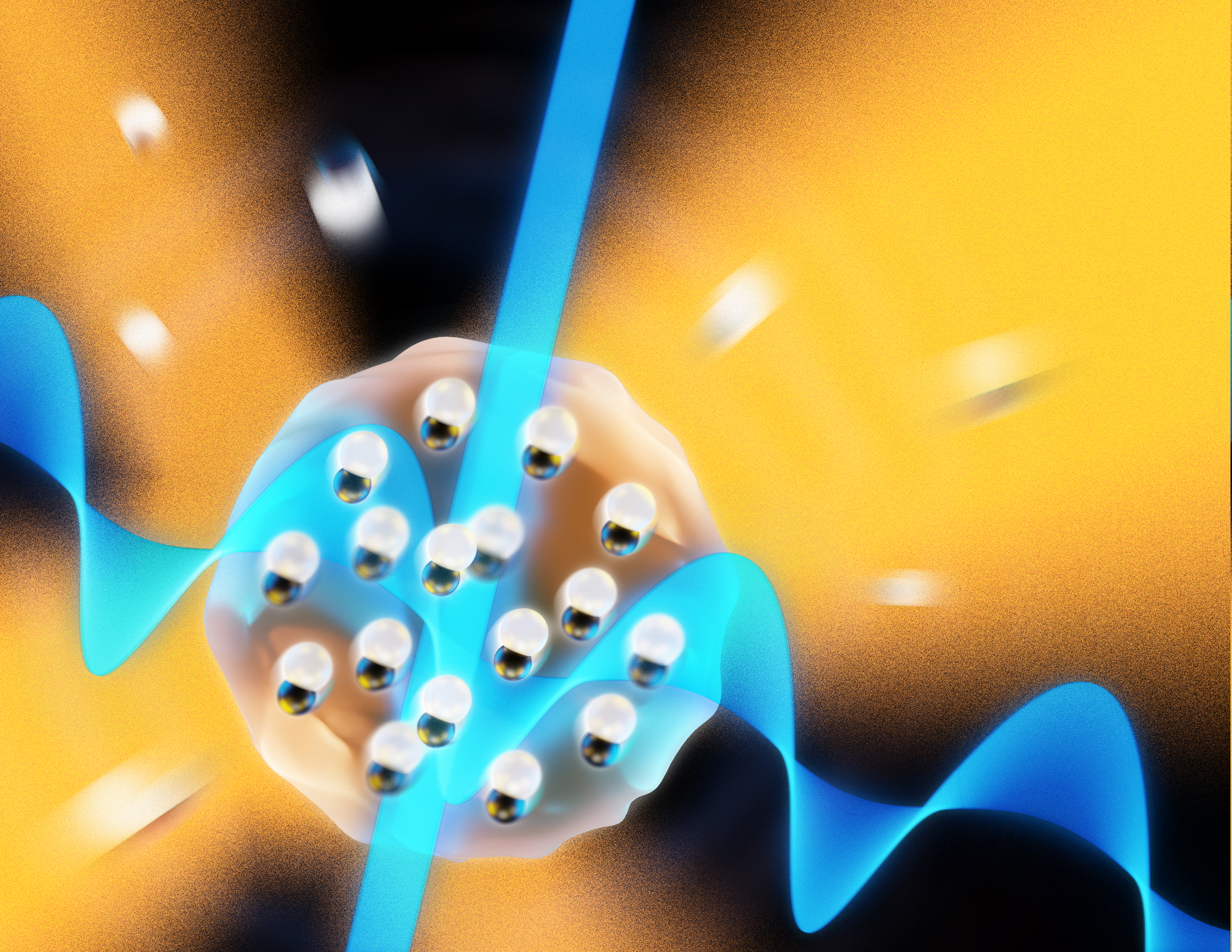
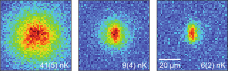
Bose-Einstein Condensate of polar molecules! Obtained by evaporating NaCs molecules with two-color microwave shielding. Sebastian Will's lab (Columbia).
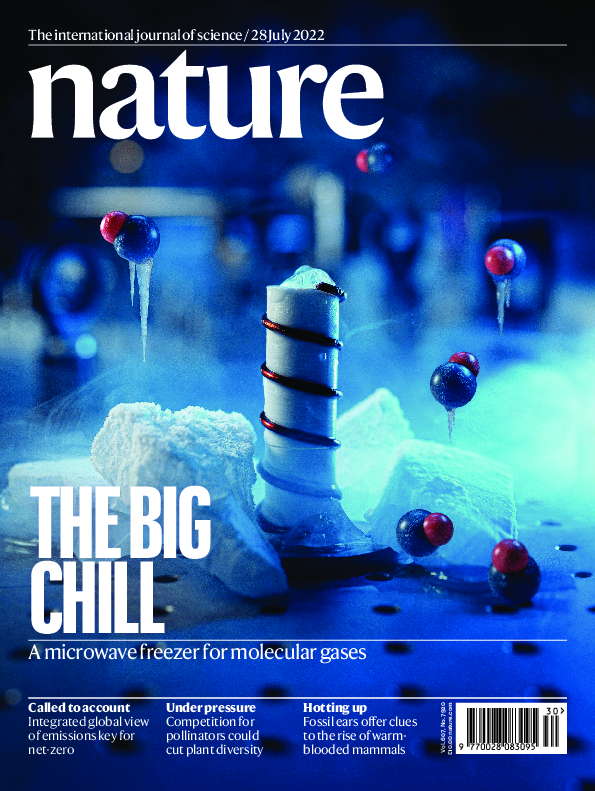
Nature (2024)Bose-Einstein Condensate of Polar Molecules
A Bose–Einstein condensate (BEC) is a remarkable state of matter in which a macroscopic number of particles occupy the same quantum state and behave collectively as a single coherent quantum system. This phase of matter emerges purely due to quantum statistics of bosonic particles, realizing a so-called quantum gas where the quantum nature of matter dominates on a macroscopic scale. BEC of atoms has been realized in 1995, yet for molecules it remained out of reach for decades: collisions between molecules lead to rapid losses, preventing the efficient evaporative cooling needed to reach quantum degeneracy.
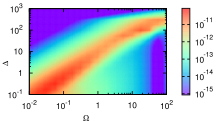
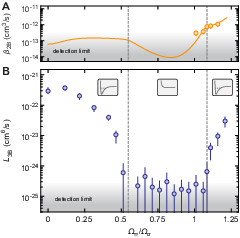
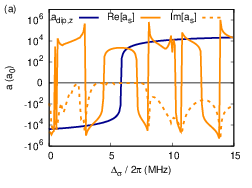
We developed microwave shielding to overcome this obstacle by engineering the interactions between polar molecules and suppressing collisional loss. In this work, we extended the technique to double microwave shielding, which strongly suppresses both two-body losses and three-body recombination. In collaboration with Sebastian Will at Columbia University, this made it possible to evaporatively cool a gas of sodium–cesium (NaCs) molecules all the way to quantum degeneracy and observe Bose–Einstein condensation. The resulting molecular condensate opens a new regime for experiments with strongly interacting dipolar quantum matter.
Press coverage
Press release IMM and Columbia.
Dutch language New Scientist, and NTvN.
Popular scientific Physics Today, Scientific American, Popular Mechanics, Science Daily, New Scientist, and Science et Vie.
News notes Nature News, EurekAlert, NSF News.
Podcast Nature.
YouTube Prof. Lemeshko.
Radio FranceInfo.